
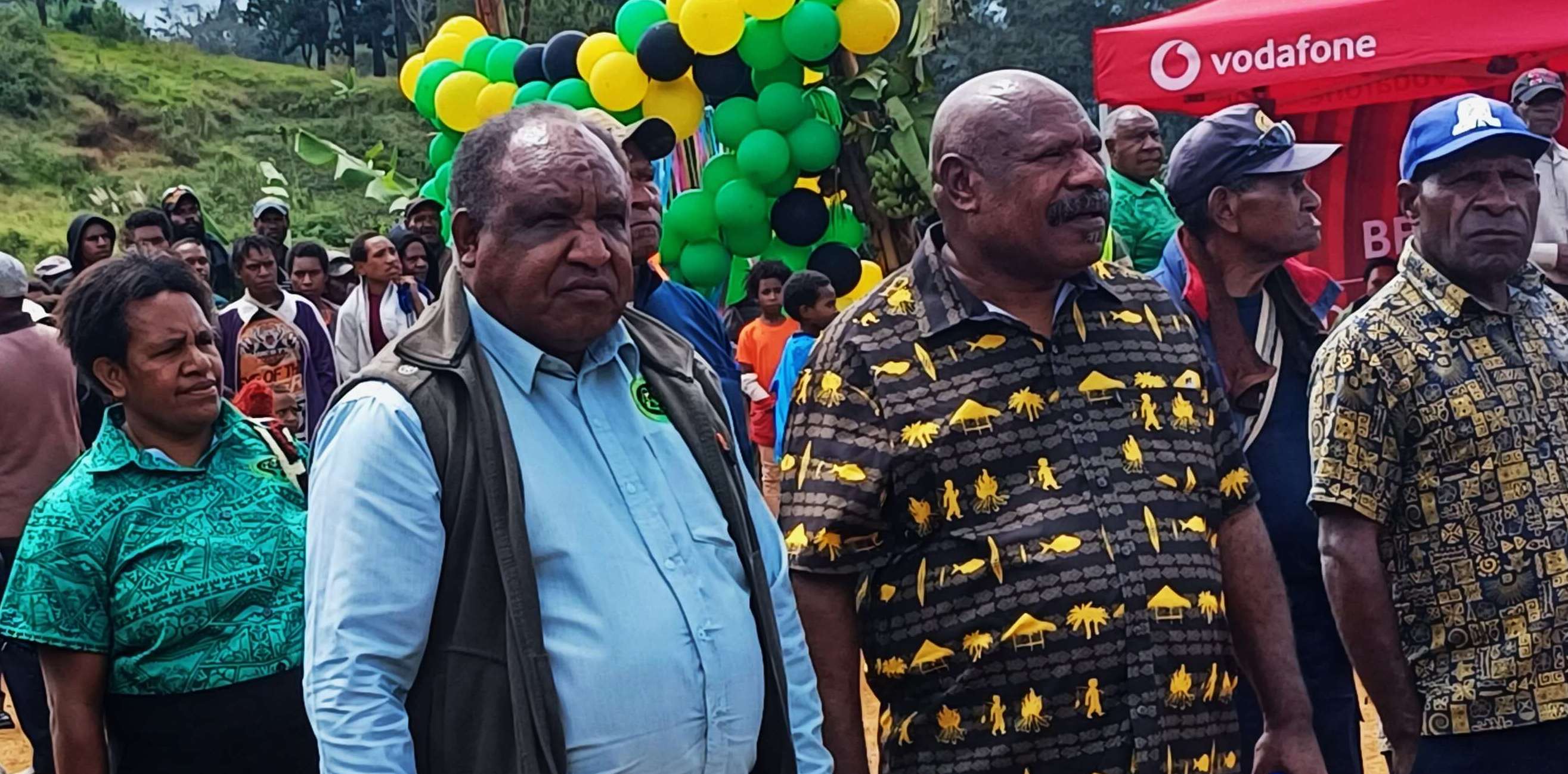
Mr. Worinu pointed out that one of the main setbacks in advancing government agenda in getting people to meaningfully participate in national development through agriculture has been the lack of collaboration between government authorities and agriculture agencies.
He said that forging partnerships is the only possibility to achieve key development agendas.
Mr. Worinu emphasized that FPDA’s mandate is to facilitate the development of the country’s horticulture industry from production to marketing through its primary function as an information source relating to horticultural activities throughout the country
“We work with farmers on a daily basis with the aim to build their capacity to shift from subsistence farming into commercial fruits and vegetables cultivation that is consistent with modern market demands.
“PNG is a growing economy where the demand for high quality and nutritious food is increasing due to an increase in food security and nutrition awareness, proportionately with an increase in population. Our farmers need to understand these situations as well as market requirements. That’s why we need partnerships to help our people.
“Commodity boards like FPDA and Coffee Industry Corporation, among others, try to deliver their programs in the districts as best as they can, but our budgets are limited.
“When we go into the districts to implement donor funded projects, we find out that the priorities of the districts are different to that of government agencies and agriculture commodity boards. That’s why we cannot achieve targets.
“We need commitment from the districts and provinces to provide support to the commodity boards to help our farmers. We need people on the ground to show commitment. Provinces and districts must align their programs with the state agencies.
“State agencies in the agriculture sector have deliberate intervention programs that run parallel and can really transform lives of people in the rural communities if they are given the boost by our local government authorities.
“FPDA, as an agriculture commodity board, rolls out its extension services to help farmers. We want to partner the districts and provinces by combining our resources and share responsibilities to help our farmers to be competitive and achieve self-sufficiency and efficiency in production,” Mr. Worinu elaborated.
He said it is worrying to see government functions in agriculture extension services, the work of the Department of Primary Industry, and agriculture institutions like colleges are collapsing.